-
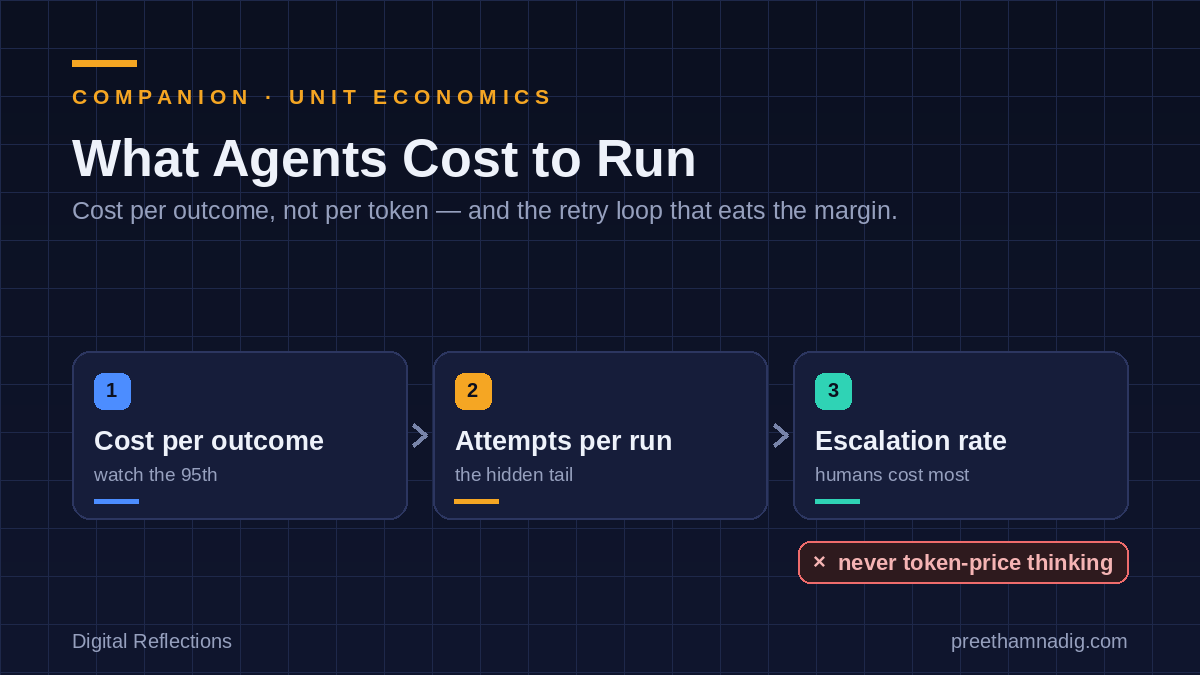
What Agents Cost to Run
I’ve written about what to charge for an AI platform. This is the other side of the ledger — the cost per run, the retry loop that quietly eats your margin, and why the cheapest model is often the expensive choice. Read ⇢
-
Your MCP Server Is an Attack Surface
The case for exposing outcome-level tools with real authority is also the case for taking their security seriously. Tool output is untrusted input, your agent carries someone else’s authority, and the blast radius is whatever you scoped. Read ⇢

-
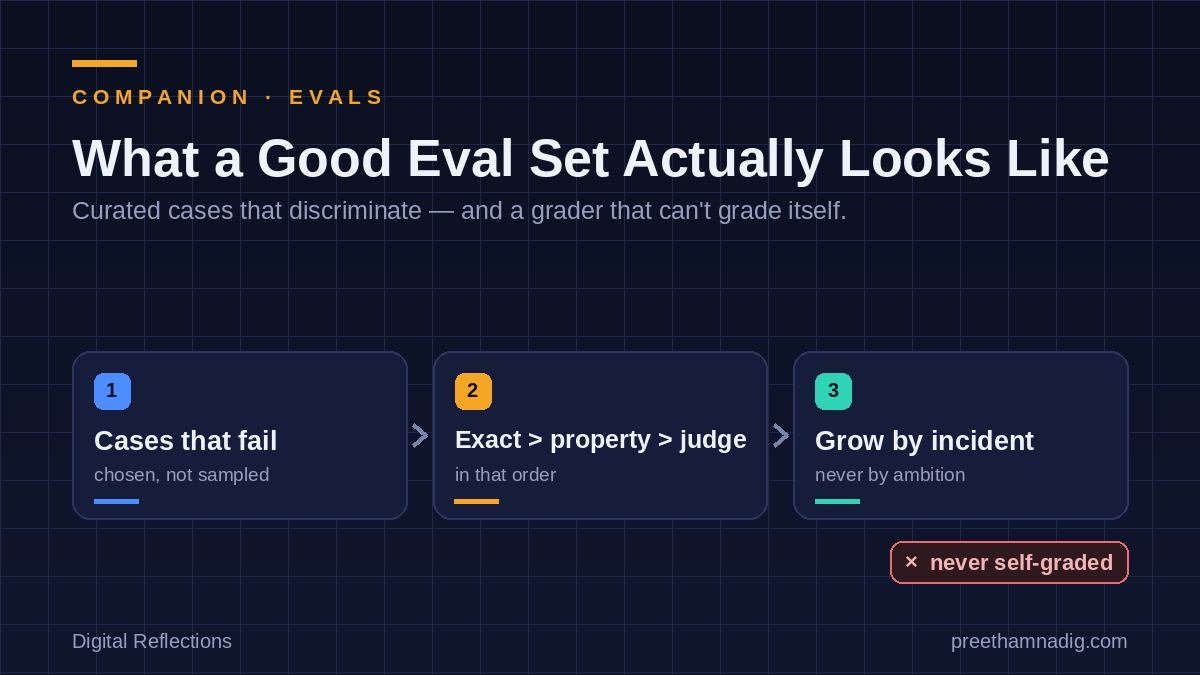
What a Good Eval Set Actually Looks Like
Everyone agrees you need evals. Almost nobody shows you one. Here’s what goes in the set, where the cases come from, how many you actually need, and what to do when the eval disagrees with the demo. Read ⇢
-
Why Agentic AI Transformation Is Hard — and the Lessons That Carry Over
Everyone treats agentic AI as a technology question. But if you’ve led a digital transformation and run a startup, you recognise the hard parts immediately — and they have almost nothing to do with the model. Read ⇢

-
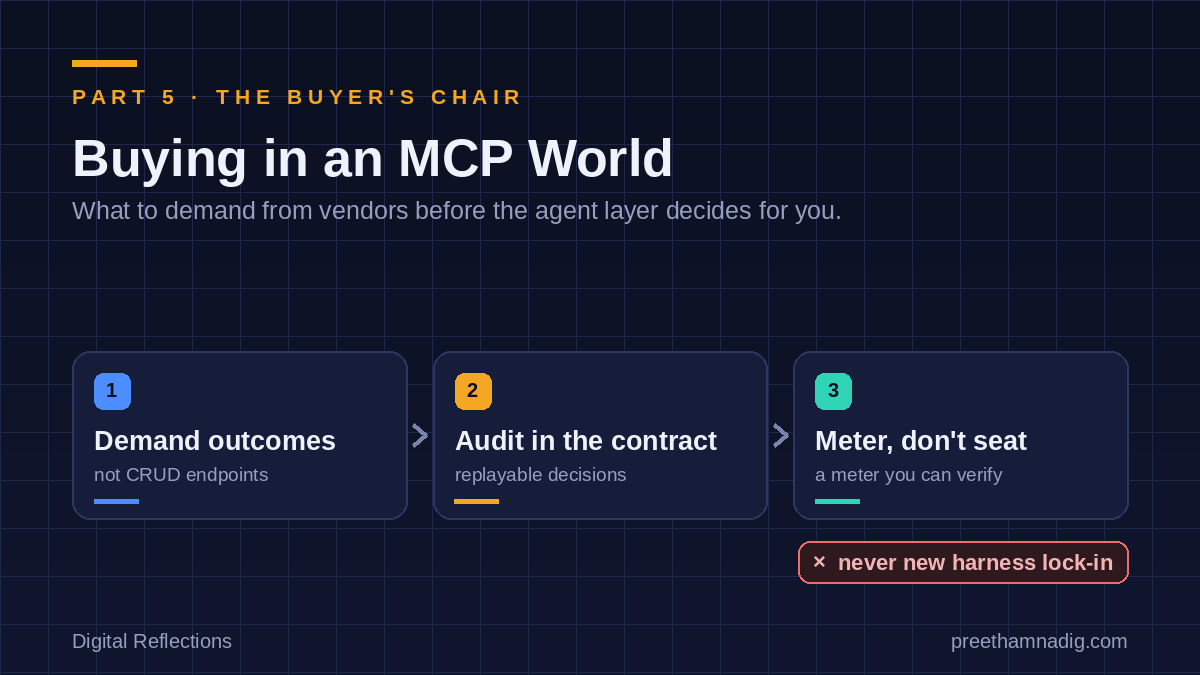
Buying in an MCP World
The same analysis from the other side of the table. If agents are going to call your vendors, the evaluation criteria change — and so does where the lock-in goes. What to demand before signing anything. Read ⇢
-
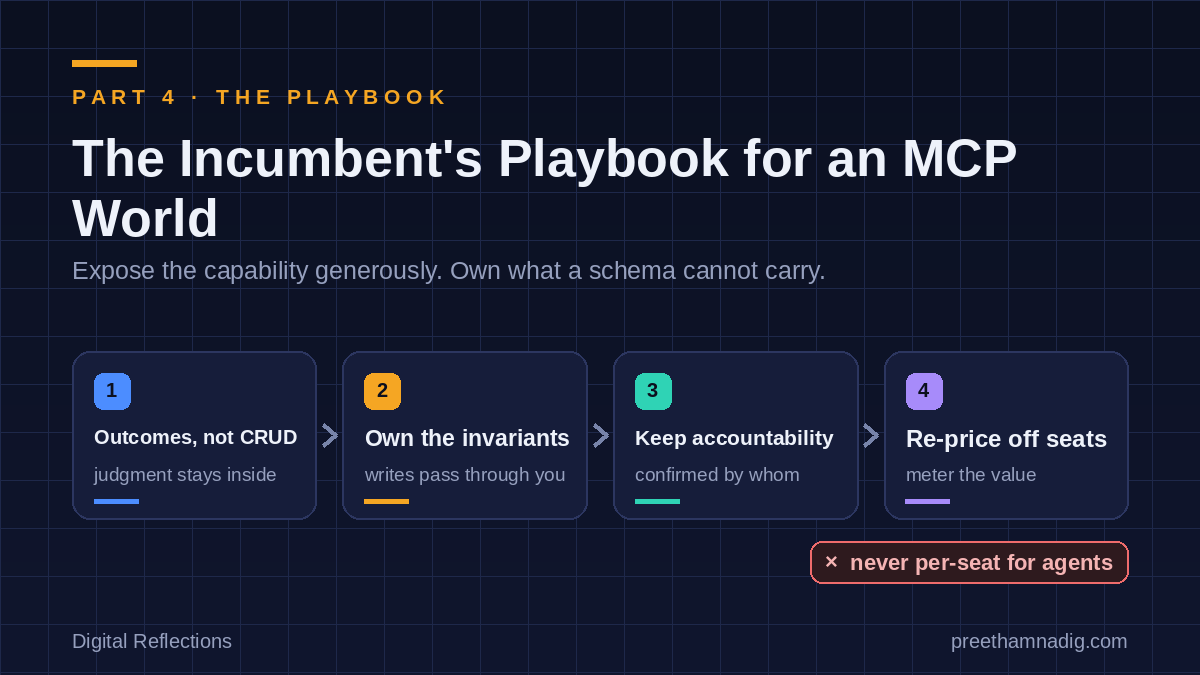
The Incumbent’s Playbook for an MCP World
Eight moves that keep an incumbent relevant once its product is callable — and four things to stop doing immediately. The through-line: expose the capability generously, and own the things a schema cannot carry. Read ⇢
-
Substrate or Façade — Who Survives Being Called
Being callable amplifies some products and hollows out others, and the sorting is not random. Four tests that tell you which side of the line you are on — before the market tells you. Read ⇢

-
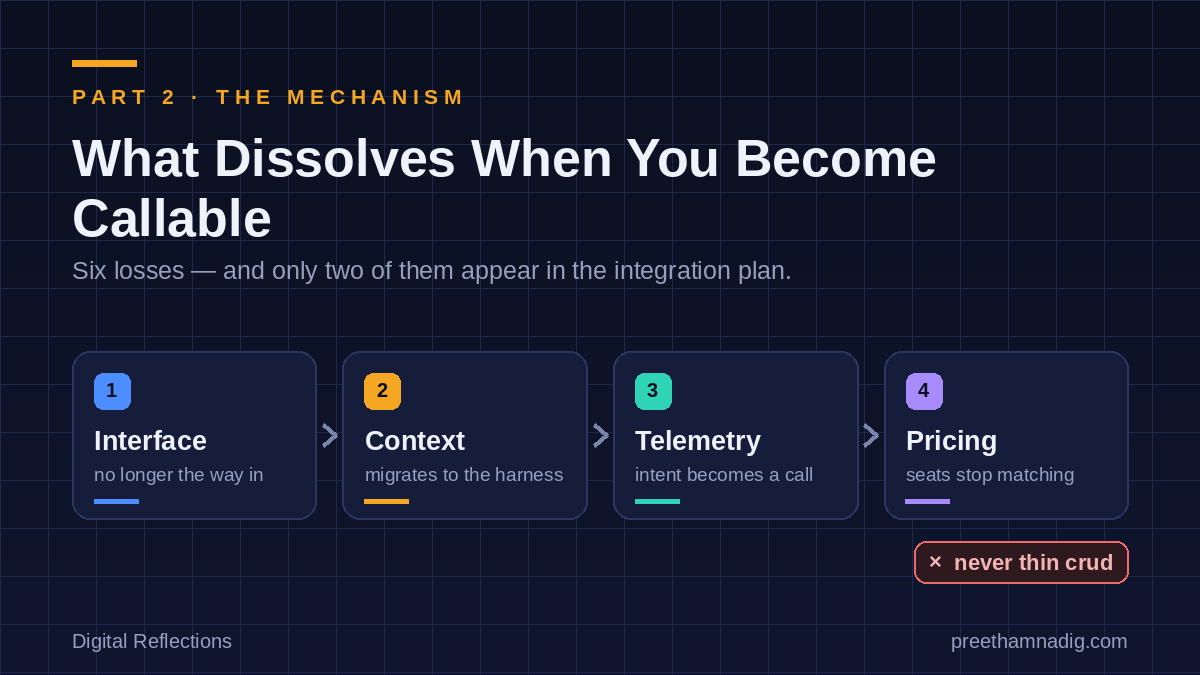
What Dissolves When You Become Callable
Exposing your product through MCP costs you six things, and only two of them show up in the integration plan. The interface, the context, the telemetry, the pricing model, the switching cost and the outcome — in roughly that order. Read ⇢
-
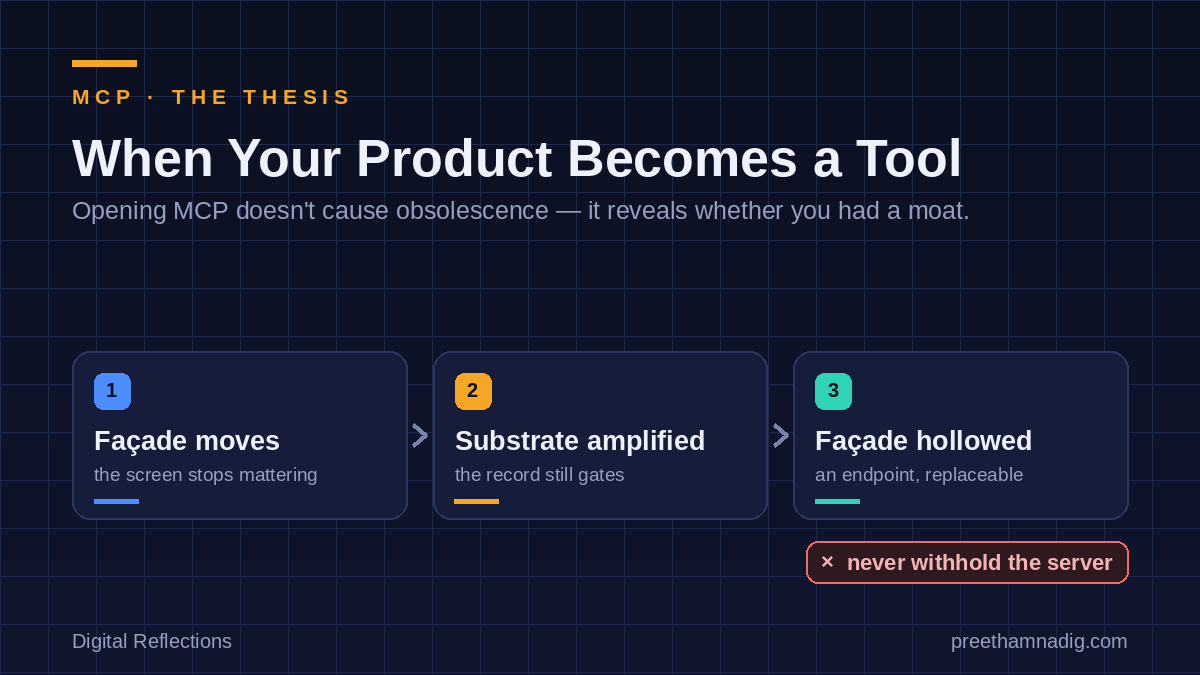
When Your Product Becomes a Tool — What Opening MCP Really Reveals
Incumbents are shipping MCP servers at speed, and many of them are quietly accelerating their own irrelevance. But the protocol isn’t what does the damage. Opening your product as a set of callable tools doesn’t create the problem — it reveals whether you ever had a moat. Read ⇢
Digital Leadership, Distilled.
Scaling transformation through Data, AI, and human–agent teaming — 23 years of hard-won lessons, distilled into strategic deep dives. Don’t miss the next shift.